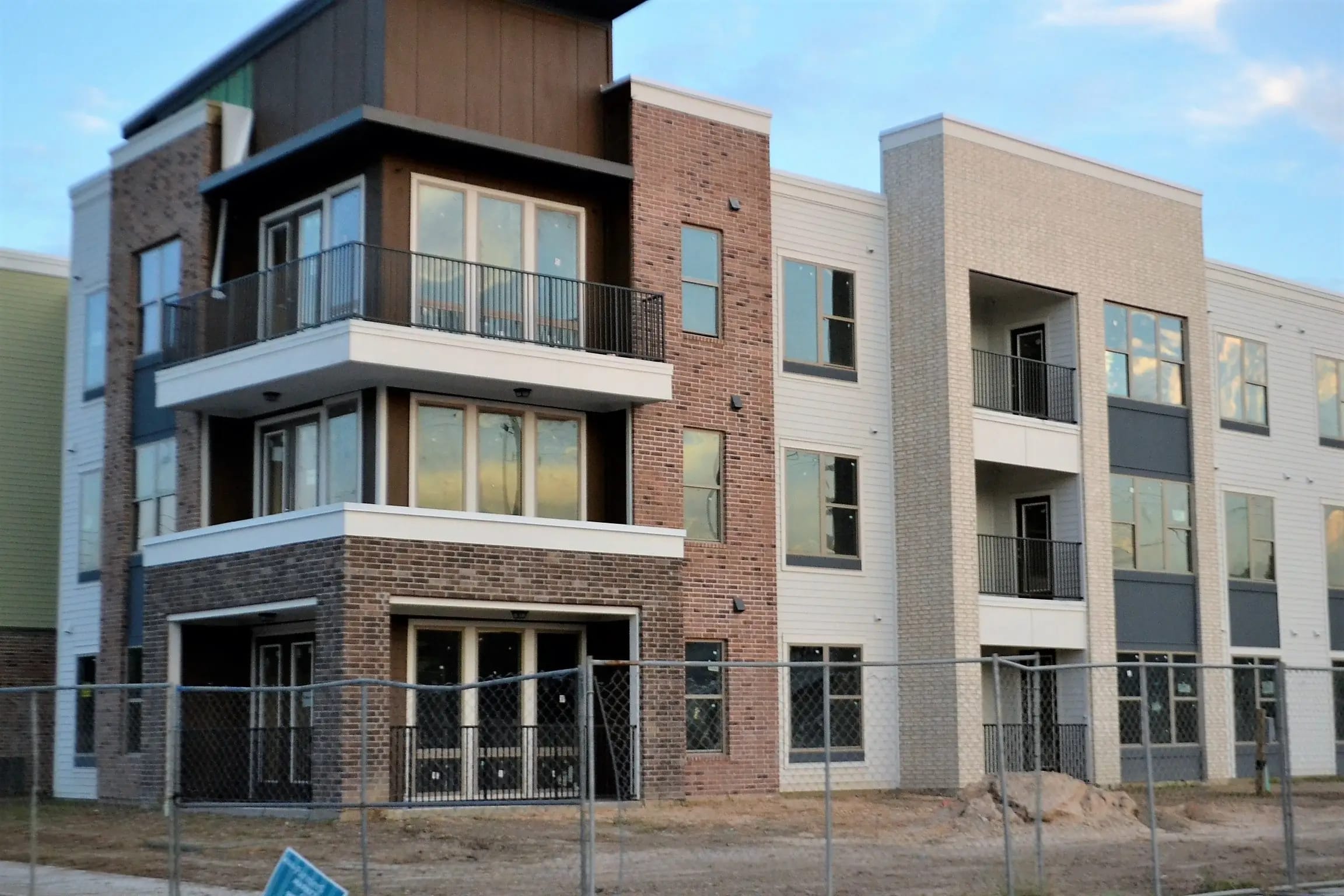
Renovating an apartment in a new-build often seems easier than working with an older property. There are no old wallpapers, worn-out pipes, layers of paint accumulated over the years, or dozens of decisions made by previous owners that need to be corrected. However, a new apartment has its own specific challenges. Some mistakes are made even before construction work begins, while their consequences only become apparent after tiles have been installed, walls painted, or furniture fitted.
The problem is not only the cost of rework. A poor decision at one stage can affect several subsequent stages. Incorrectly positioned sockets may require changes to the furniture plan. Plumbing mistakes may require tiles to be removed. Failing to plan the lighting in detail can turn a finished apartment into a space filled with extension cords and additional light fixtures.
Below, we look at 12 mistakes that most often cause problems when finishing an apartment in a new-build, as well as the approximate financial scale of their consequences. The amounts are provided as guidelines to illustrate potential costs rather than as universal rates: the actual cost depends on the apartment's size, the complexity of the work, the materials used, the condition of the property, and the extent of any rework required.
1. Starting the work without a detailed apartment plan
One of the most common mistakes is trying to start work immediately after receiving the keys. The owner already has an idea of what the future interior should look like, so there is a natural desire to move quickly to demolition, partition installation, or utility work.
In practice, the beginning is precisely when the largest number of decisions needs to be made. Where will the kitchen be located? What bed will be used in the bedroom? Where will the TV, workspace, washing machine, boiler, and air conditioner be placed? What will the lighting look like? Which doors are needed, and in which direction will they open?
If work begins without answers to these questions, the construction team has to work from an approximate plan. Later, it may become clear that some of the decisions do not correspond to the residents' actual needs.
The financial consequences depend on how far the work has progressed. Moving a partition at an early stage may cost several thousand UAH, while demolishing it after plastering, painting, and flooring have been completed can increase the costs several times over. For a medium-sized apartment, the total cost of correcting an unsuccessful layout can easily reach an additional UAH 20,000-60,000 or more.
Therefore, planning should not be viewed as a formal part of the renovation, but as a way to reduce the number of future corrections.
2. Failing to account for the actual apartment dimensions before ordering furniture
The developer's plan cannot always be used as the sole basis for the future interior. The actual dimensions of the rooms should be checked on site.
A difference of just a few centimetres can matter for a kitchen, built-in wardrobe, shower area, or hallway furniture. Narrow passages and small rooms are particularly sensitive, as every centimetre can affect functionality.
For example, an owner may order a kitchen based on preliminary dimensions, only to discover after the walls have been levelled that the cabinets no longer fit into the planned niche. Sometimes the problem can be solved with a minor adjustment. In other cases, part of the furniture has to be modified.
The cost of the consequences can range from UAH 5,000-10,000 for a minor adjustment to tens of thousands of hryvnias for significant furniture modifications or reordering individual elements.
That is why it is important to have up-to-date measurements before starting the main work and to understand how the actual geometry of the rooms will affect the future interior.
3. Postponing electrical work until the finishes have already been determined
Electrical installation is often viewed as a technical part of the renovation that can be completed approximately according to plan. In reality, the electrical system is directly connected to the furniture, lighting, and ways in which the apartment will be used.
The number of sockets, their height, and their location depend on where the bed, sofa, TV, desk, kitchen appliances, and other devices will be placed.
The mistake becomes obvious after the finishing work has been completed. For example, a socket may end up behind a kitchen cabinet, or a switch may be blocked by an open door. The owner then starts using extension cords or calls a specialist to relocate the point.
If the walls have already been prepared and painted, relocating a single point requires more than electrical work. The surface will have to be chased, restored, and repainted.
Depending on the number of points and the condition of the finishes, additional costs may amount to approximately UAH 5,000-25,000. If the mistakes concern a large number of sockets and lighting points, the amount may be significantly higher.
4. Failing to plan the lighting before work begins
Another typical situation occurs when the owner first determines the ceiling design and only then tries to decide where the light fixtures should be located.
A modern apartment is rarely limited to a single central chandelier. It may require general lighting, local lighting, task lighting, wall lights, decorative lighting scenarios, kitchen lighting, or mirror illumination.
If the lighting points are not planned in advance, some fixtures may have to be installed using surface-mounted structures or exposed wiring. Another option is to interfere with the finished ceiling again.
Reworking several lighting points may cost UAH 5,000-20,000. If the problem requires part of the ceiling to be dismantled and refinished, the costs increase.
It is important to plan not only the number of light fixtures but also the lighting scenarios. Something that looks good in a visualization should remain convenient in everyday life.
5. Saving money on preparing surfaces for finishing
Apartment owners often pay more attention to final finishing materials. They choose tiles, paint, wallpaper, and flooring while trying to reduce costs on preparatory work.
The problem is that the quality of the final result largely depends on the underlying surfaces. Uneven walls may become visible after painting. Poorly prepared surfaces can affect the durability of the finishes. Incorrect floor preparation can cause problems after the flooring has been installed.
In a new-build, the condition of the surfaces should not be assessed visually alone. It is necessary to check the geometry, level differences, joints, the base for future finishes, and other parameters that will affect subsequent work.
Saving UAH 10,000 on preparation can potentially turn into UAH 20,000-40,000 in rework costs if a defect becomes apparent after the final finishes have been completed.
6. Starting the final finishing before hidden utilities are completed
Another mistake is related to performing the work in the wrong order. The owner wants to see beautiful tiles, painted walls, or finished flooring as soon as possible. However, all work that could damage completed surfaces should be finished before the final finishing stage.
Electrical installation, plumbing, certain ventilation solutions, surface preparation, and other hidden processes should be resolved before correcting them becomes difficult.
Imagine that, after the tiles have been installed, it turns out that a plumbing outlet needs to be moved. The specialist will have to remove part of the tiling, make the necessary changes, purchase replacement materials for the damaged sections, and restore the surface.
One such mistake can cost UAH 5,000-15,000. If a large area or expensive materials need to be redone, the costs will be higher.
The technological sequence of the work is no less important than the choice of materials itself.
7. Buying materials without a unified plan
Buying materials independently may seem like a way to save money. The owner compares prices, looks for promotions, and orders materials gradually.
However, the number of items in a major renovation quickly grows. It is necessary to consider quantities, material compatibility, delivery times, reserves, storage requirements, and the sequence in which the materials will be used.
Another problem arises when there is not enough material from a particular batch. Some time later, the same shade may no longer be available, while a new batch of tiles or laminate may differ.
The financial impact depends on the material. For inexpensive items, the losses may amount to several thousand hryvnias. For large quantities of tiles, flooring, doors, or plumbing equipment, unnecessary purchases and repeat deliveries can result in UAH 10,000-30,000 in additional costs.
It is more reasonable to plan purchases based on an approved project and the actual scope of work.
8. Failing to allow enough time for material deliveries
Even a well-organized renovation can slow down if the required material does not arrive on time.
The riskiest situation is when each stage begins immediately after the previous one and materials are ordered at the last minute. A delay in a single item may force the team to move to another project or leave part of the work unfinished.
For the owner, this situation means more than simply a delay in the schedule. There may be additional costs for delivery, another visit by specialists, or temporary material storage.
A delay of several days may not create significant financial losses. However, if the absence of one material stops an entire block of work, indirect costs may amount to UAH 5,000-20,000 or more.
Therefore, the renovation schedule should be coordinated with the purchasing schedule rather than treating them as two independent processes.
9. Changing decisions during the work
The phrase "Let's do it a little differently" often seems harmless at an early stage. However, every change made after work has started has consequences.
Moving a partition may affect the electrical system. Changing the kitchen layout may require plumbing outlets to be relocated. Choosing different tiles may require the layout to be adjusted. Changing the doors may affect the dimensions of the openings.
The biggest problem occurs when changes are agreed verbally and their cost is not documented.
A single minor change may cost UAH 2,000-5,000. Several decisions made after the work has already started can easily create an additional budget of UAH 20,000-50,000.
Therefore, changes should be assessed before they are implemented. The owner should understand not only the price of the new material or work but also what will have to be redone.
10. Failing to inspect the apartment after individual stages are completed
Inspection is needed not only at the end of the renovation. It is much easier to correct a problem while the next layer has not yet covered the previous work.
For example, electrical points should be checked before plastering. The location of plumbing outlets should be verified before tiling. Surface preparation can be assessed before the final finish is applied.
If inspection is postponed until the apartment is handed over, some defects will already be hidden beneath subsequent layers of work.
The cost of correcting a single issue may amount to several thousand hryvnias. However, systematic rework at the final stage can cost UAH 20,000-70,000 depending on the number of problems.
That is why stage-by-stage quality control should be regular rather than a one-time procedure.
11. Failing to set aside a budget for unforeseen decisions
Even a well-planned renovation may require additional decisions. The owner may change a material, add lighting, choose different plumbing fixtures, or decide to install an additional system.
The problem arises when the budget is calculated down to the last hryvnia and any change immediately creates financial pressure.
At the same time, a reserve does not mean that the budget should be increased without control. It means understanding the budget limits and clearly separating essential work from optional improvements.
For a specific project, the size of such a reserve should be determined individually. It is also important not to confuse a reserve for the owner's own changes with a situation where the contractor simply failed to include some necessary work in the initial estimate.
12. Choosing a contractor based solely on the lowest price
A low starting price naturally attracts attention. However, comparing offers solely by the figure per square metre is risky.
Two estimates may cover apartments of the same size but include different scopes of work, materials, and responsibilities of the parties. One proposal may include preparatory processes, material procurement, and a significant number of related tasks, while some costs in another proposal may appear later.
That is why it is important to compare not the starting figure but the full scope of the offer. You should check which works are included in the budget, who is responsible for purchasing materials, how changes are approved, how stages are monitored, and what exactly is documented in the contract.
The difference between the advertised low price and the actual cost may amount to tens of thousands of hryvnias. In complex cases, trying to save money at the start can result in paying for completed work twice.
How Much Can Mistakes Actually Cost?
An individual mistake is easy to underestimate. Moving a single socket or replacing several damaged tiles may not seem like a major expense. However, during a renovation, the consequences often accumulate.
If problems with electrical installation, layout, purchasing, surface preparation, and final finishing occur at the same time, additional costs can already reach tens of thousands of hryvnias.
A hypothetical example for an apartment in a new-build could look like this:
| Mistake | Approximate scale of additional costs |
|---|---|
| Moving partitions after work has started | UAH 10,000-40,000 |
| Reworking electrical points | UAH 5,000-25,000 |
| Reworking plumbing outlets | UAH 5,000-20,000 |
| Refinishing damaged surfaces | UAH 5,000-30,000 |
| Mistakes when purchasing materials | UAH 5,000-30,000 |
| Reworking furniture due to incorrect dimensions | UAH 10,000-50,000 |
| Reworking a completed stage | UAH 10,000-40,000 |
| Delays caused by missing materials | UAH 5,000-20,000 |
The ranges above are not a price list. They illustrate the potential scale of the financial consequences. In a specific apartment, the same mistake may cost significantly less or more depending on the size, materials, and stage at which the problem is discovered.
Why One Mistake Often Causes Several Others
In renovation, the principle "one mistake equals one additional payment" rarely works. The different stages are interconnected.
For example, an incorrectly chosen kitchen location first affects the electrical and plumbing systems. Once they have been installed, the problem moves on to the finishing stage. If the walls have already been painted, they may need to be damaged to relocate the utilities. The surface then has to be restored.
Thus, one mistake at the planning stage creates costs at several subsequent stages.
That is why saving time on preparation often turns out to be the most expensive decision. The earlier a problem is identified, the cheaper it is usually to correct.
How to Reduce the Risk of Mistakes During a New-Build Renovation
The most reliable approach is not to try to personally control every movement of every specialist, but to create a clear process.
Before work begins, you should have up-to-date measurements, a well-planned layout, a project, and an understanding of where the furniture will be located. Based on these elements, electrical points, plumbing, lighting, and other utilities can be determined.
The next step is to agree on the scope of work and materials. If the cost depends on the finishing package, it is important to understand exactly what is included in each option rather than focusing solely on the figure per square metre.
The next factor is sequence. Work should be performed in a logical order so that finished surfaces do not have to be damaged in order to install hidden utilities.
Quality control is equally important. You should inspect not only the completed apartment but also intermediate results that will later be covered by subsequent layers.
When a Turnkey Renovation Can Help Avoid Unnecessary Costs
For an apartment owner, one of the main challenges is the need to coordinate dozens of processes simultaneously. You have to communicate with specialists, find materials, monitor deliveries, check completed stages, and make decisions.
A turnkey renovation format involves transferring a significant part of this work to a single team. In this model, what matters is not the phrase "turnkey" itself but how clearly the areas of responsibility are defined.
At RSU, the cost of finishing packages is calculated per square metre, and the offer includes works and materials according to the selected solution. This approach makes it possible to get an initial budget estimate at the beginning, while the detailed calculation for a specific project takes the apartment's individual parameters into account.
Procurement management is also important. RSU prepares a list of materials, agrees it with the client, organizes purchasing, and accepts deliveries. For the owner, this reduces the number of processes that have to be controlled independently.
What Matters Is Not the Absence of Changes, but Control Over Them
It is practically impossible to eliminate all changes during a renovation. During the process, the owner may realize that they want different lighting, an additional socket, different plumbing fixtures, or a change to a particular design solution.
A change becomes a problem when its consequences are unclear.
Before making an adjustment, it is worth determining exactly what is changing, what additional work will be required, which materials will need to be replaced, and how the decision will affect the schedule.
This approach makes it possible to make informed decisions. The owner understands exactly what they are paying for, while the team receives a clear task.
What Should Be Checked Before Starting the Renovation?
Before starting work in a new-build, it is worth going through several key questions. Do the actual apartment dimensions correspond to the plan? Is it clear where the furniture will be placed? Have the sockets and lighting been determined? Have the plumbing points been agreed? Is the scope of work clear? Have the materials been taken into account? Who is responsible for purchasing? How are changes approved? How are individual stages accepted?
If some of these questions remain unanswered, starting active work is risky.
The more detailed the project is prepared before the first day on site, the fewer decisions will have to be made under pressure. And rushed decisions are among the most common sources of additional costs.
Conclusion
Renovating an apartment in a new-build can become expensive not because of one major mistake, but because of dozens of small decisions made without sufficient preparation. Incorrectly positioned sockets, a lack of a lighting plan, inaccurate measurements, premature final finishing, chaotic purchasing, or changes made after work has started can gradually increase the budget.
The best way to reduce risks is through planning before work begins, a detailed estimate, a clear division of responsibilities, the correct sequence of work, and regular monitoring of intermediate results.
For an apartment owner, it is important to view the renovation as a single process. Saving money at one stage does not necessarily mean saving money overall. If a cheaper solution leads to rework, additional material purchases, or lost time, its actual cost turns out to be significantly higher.
That is why, before starting the renovation, it is worth assessing not only the cost of the work but also how transparently the entire process is organized: from measurements and design to purchasing, execution, stage-by-stage quality control, and handover of the completed apartment.