Fitting out a bathroom is one of the most important stages of finishing an apartment in a new-build property. The choice of sanitary fixtures affects not only the appearance of the interior but also the convenience of daily routines, water consumption, ease of cleaning, and the ability to make rational use of every square metre. For this reason, before starting finishing work, homeowners often consider which option is better: a traditional bathtub or a modern shower area.
Both options have their advantages and limitations. A bathtub is suitable for relaxing, bathing children, and handling various household tasks. A shower makes it possible to freshen up quickly, save space, and create a functional interior even in a small bathroom. However, the final decision depends on the room's dimensions, household composition, residents' habits, renovation budget, and the apartment's technical characteristics.
To make an informed choice, it is worth comparing both solutions against the main criteria and considering how each will affect everyday life.
1. Bathroom Size and Layout Possibilities
In new-build properties, bathroom size depends on the housing category, apartment layout, and number of rooms. In compact apartments, bathrooms often have limited floor space, so positioning sanitary fixtures requires particularly careful planning. Homeowners need to allow room for a washbasin, washing machine, storage systems, towel radiator, and comfortable access.
A standard bathtub measuring 150–170 cm in length occupies a considerable portion of the room. In addition to its dimensions, space must be allowed for comfortable use, access to the mixer tap, and cleaning. Installing a bathtub in a small bathroom can make it more difficult to accommodate a washing machine or a spacious vanity unit.
A shower area generally provides greater flexibility when planning the layout. For example, a unit measuring 80 × 80 cm requires less space than a full-size bathtub, although the actual savings depend on the room's configuration. A shower can be installed in a corner, along a wall, or inside a specially designed alcove.
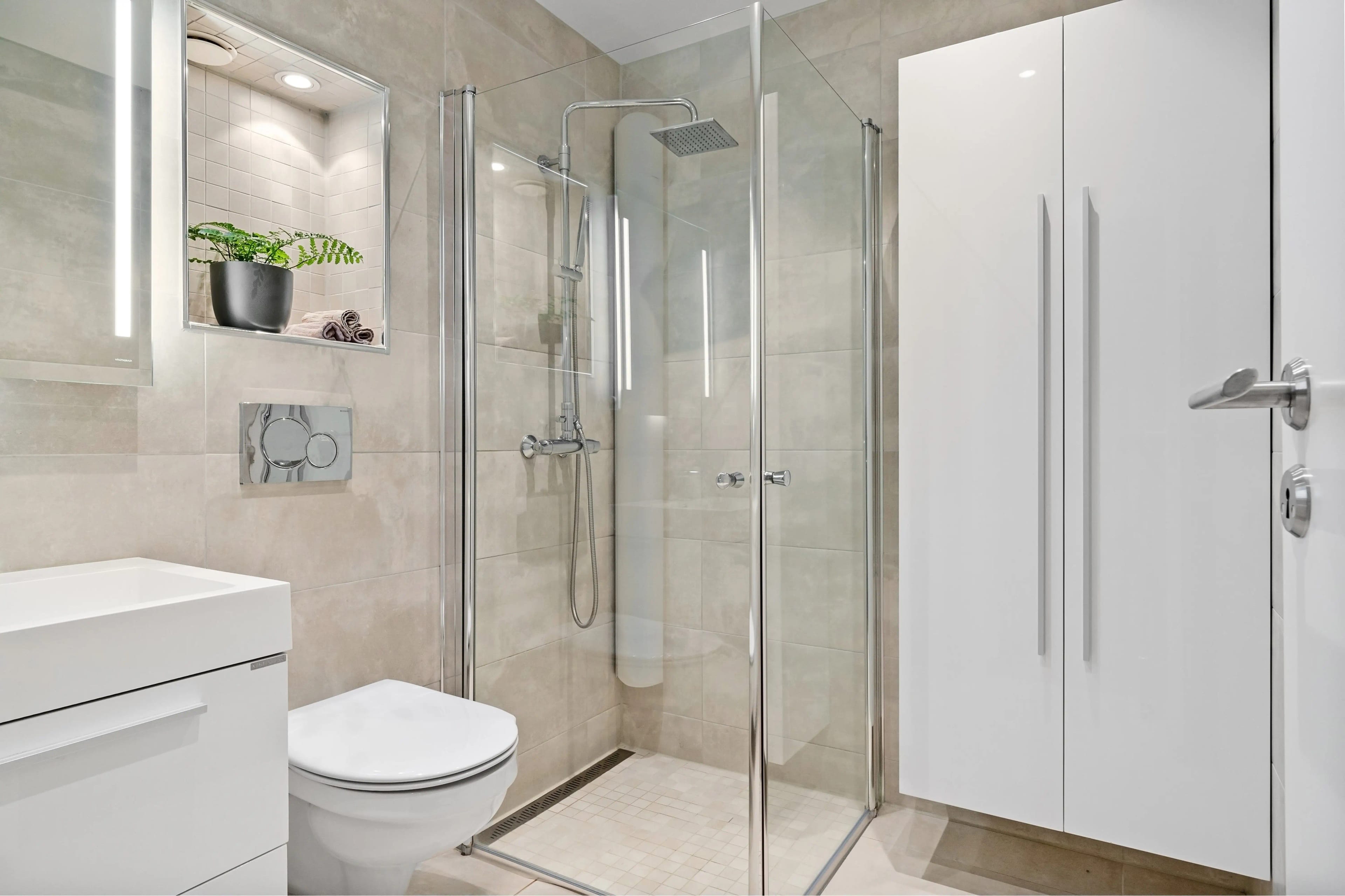
A shower area with a glass partition is particularly practical in a small apartment. Transparent glass does not visually overwhelm the interior, while the absence of a bulky shower tray creates a more open feeling. However, this type of installation requires proper floor preparation, a correctly calculated gradient, and a well-designed drainage system.
When planning the bathroom, it is important to consider not only the dimensions of the equipment but also door clearance, access to plumbing connections, and safe movement around the room. Even a compact shower enclosure can prove inconvenient if its doors obstruct the walkway or interfere with access to the washbasin.
2. Water Consumption and Everyday Savings
Rational water consumption matters to households looking to manage their utility bills. In this respect, a shower often has an advantage, although the result depends on the duration of each shower, the flow rate of the showerhead, and residents' habits.
Filling a standard bathtub generally requires approximately 120–180 litres of water, although the actual amount depends on its shape, dimensions, and filling level. During bathing, the human body displaces some of the water, so the bathtub's maximum capacity does not equal typical consumption per bath.
Water consumption during a shower is determined primarily by its duration and the showerhead's flow rate. At a flow rate of 8 litres per minute, a five-minute shower uses approximately 40 litres of water. If the shower lasts ten minutes, consumption increases to 80 litres.
However, a long shower with a high-flow showerhead can use more water than filling a small bathtub. Installing a shower system alone does not guarantee savings.
The following measures can help reduce water consumption:
-
A thermostatic mixer that makes it easier to maintain a comfortable water temperature.
-
A water-saving showerhead with an optimised flow rate.
-
Turning off the water while applying soap or shampoo.
-
Keeping plumbing fixtures in good working order and repairing leaks promptly.
-
Installing a water heater with an appropriate capacity if the apartment has an independent hot-water supply.
The energy required to heat water should also be considered. The more hot water a household uses each day, the more energy is needed to heat it. This factor is particularly relevant in apartments equipped with electric water heaters.
3. Bathtubs: Advantages That Remain Relevant
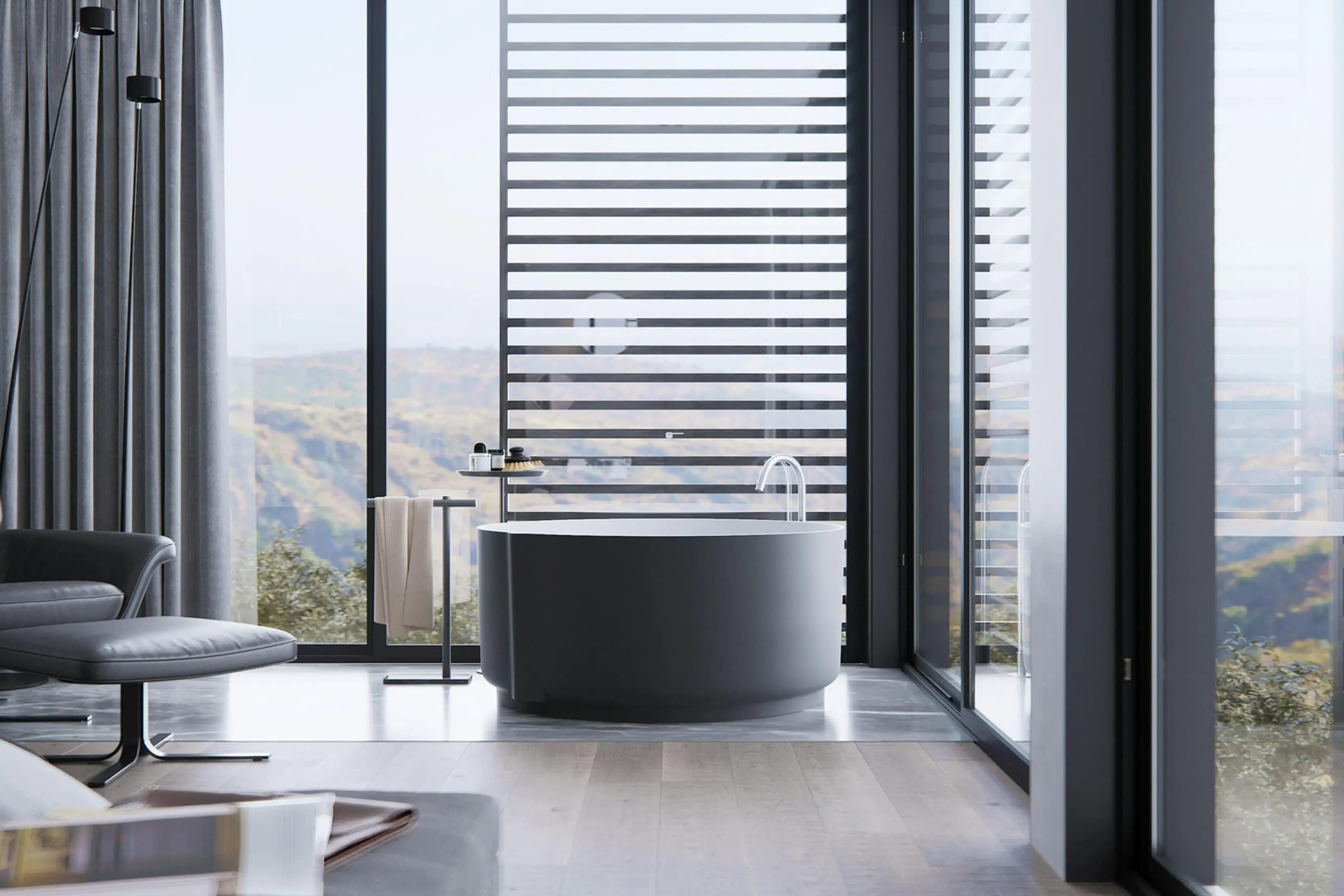
Bathtubs remain popular because of their versatility. They allow residents to maintain personal hygiene and enjoy a relaxing soak after a long day. Warm water may help promote relaxation, although bathing temperature and duration should suit each person's individual needs.
For families with young children, a bathtub is often especially convenient. It makes bathing easier and can also accommodate certain household tasks, such as soaking clothes or washing large items that are difficult to handle in a washbasin.
Another advantage is the possibility of combining a bathtub with a shower system. A mixer tap with a handheld showerhead and a protective curtain allows the bathtub to serve for quick daily washing. This compromise suits people who do not want to give up bathing but still want the convenience of a shower.
When choosing a bathtub, it is important to consider the material. Acrylic bathtubs are relatively lightweight, retain heat well, and come in a wide range of shapes. Steel models are generally lightweight and affordable but can be noisier when filling with water. Cast-iron bathtubs are considerably heavier and retain heat for a long time, but they require a sturdy supporting structure and can be more difficult to install.
The disadvantages of a bathtub include its substantial footprint, the need to clean the inner surface regularly, and the difficulty of stepping over a high rim for people with limited mobility. In addition, a long bath generally consumes more water than a short shower.
4. Shower Areas: Compact Design and Modern Comfort
A shower area is particularly suitable for apartments where every square metre matters. It allows sanitary fixtures to be arranged more efficiently, frees up space for a washing machine, or creates room for additional storage.
Modern shower solutions vary in design. The most common options include an enclosure with a ready-made shower tray, a corner shower with glass panels, and an open shower area with a floor drain. The choice depends on the budget, technical requirements, and preferred interior style.
A ready-made shower enclosure simplifies installation because its components are supplied as a set. The shower tray collects water in a designated area, and the enclosure can be suitable where installing a level-access shower is difficult. However, tracks, joints, and moving doors require regular cleaning.
A shower area with transparent glass creates a lighter appearance and suits minimalist interiors. If a linear drain is installed, the floor can be finished with tiles without a raised shower tray. This option requires precise installation because errors in the floor gradient or waterproofing can cause water to accumulate or leak into surrounding areas.
The main advantages of a shower include:
-
Saving space in a compact bathroom.
-
Convenient, short daily washing routines.
-
The possibility of creating a level-access entrance.
-
A wide selection of mixer taps, showerheads, and glass partitions.
-
Potentially lower water consumption when showers are kept short.
Nevertheless, a shower is not always a universal replacement for a bathtub. Bathing young children, soaking large items, or relaxing in warm water can be more difficult. Open shower designs also require careful planning to prevent splashes from reaching the washing machine, furniture, and doors.
5. Which Option Is More Practical for Different Households?
When choosing bathroom fixtures, it is better to consider residents' actual lifestyles rather than follow current trends.
For a single person or a couple with an active lifestyle, a shower area often proves the most convenient option. It allows residents to get ready for work quickly, frees up space, and makes a small bathroom easier to organise.
Families with young children generally benefit more from having a bathtub. It simplifies bathing, although household needs may change as children grow older. If people of different ages live in the apartment, it is worth considering a bathtub equipped with a shower system.
For older adults or people with limited mobility, reducing the risk of falls is essential. A high bathtub rim can make getting in and out difficult. A shower area with level access, a non-slip surface, secure grab bars, and a seat usually offers more opportunities for safe use. However, the absence of a shower tray does not automatically make a shower safe: the floor gradient, surface material, and positioning of support features also matter.
If the apartment is intended for rental, the needs of potential tenants should also be considered. In a small property designed for one person, a practical shower may be attractive because it saves space. For family rentals, a bathtub can sometimes be a more versatile choice.
6. Comparing Bathtubs and Showers Against the Main Criteria
| Criterion | Bathtub | Shower Area |
|---|---|---|
| Space requirements | Requires more room | Often more compact |
| Water consumption | Usually higher when filled | Can be lower during a short shower |
| Bathing children | Convenient | May be less practical |
| Relaxing in warm water | Suitable | Not possible in the same way |
| Accessibility for people with limited mobility | A high rim can be an obstacle | Level access can be provided |
| Cleaning | The tub and rim require cleaning | Glass, joints, and the drain need maintenance |
| Installation | Usually simpler with existing connections | More complex when there is no shower tray |
| Layout flexibility | Depends on the bathtub's dimensions | Often offers more options |
| Everyday versatility | High | Depends on household needs |
The table highlights general differences rather than identifying one universally correct solution. For example, a compact sit-down bathtub may be more practical than a large shower enclosure, while a properly designed walk-in shower may be more convenient than a bulky enclosure with a high tray.
7. Installation in a New-Build Property: What to Consider
When finishing a new apartment, it is important to consider not only the type of sanitary fixture but also the technical conditions required for installation. The position of the drainage stack, floor height, water supply points, and equipment connections all affect the cost and complexity of the work.
A bathtub requires a stable supporting structure, a properly connected waste trap, and access to components that may need servicing. If the tub is enclosed by a decorative panel, it is advisable to leave an access opening for plumbing repairs.
A walk-in shower without a raised tray requires even more careful preparation. Installers must create the correct gradient towards the drain, waterproof the floor and adjoining surfaces, and test the drainage system for leaks. It is important to determine in advance whether the floor structure allows the drain to be installed at the required height.
Waterproofing should cover not only the floor but also the necessary sections of the walls, in accordance with the project and the selected system's installation requirements. Particular attention should be paid to corners, joints, pipe penetrations, and mixer installation points. Even high-quality tiles cannot replace a waterproofing membrane.
At the planning stage, it is useful to review recommendations on finishing an apartment in a new-build property. Coordinating sanitary fixtures, finishing materials, and engineering work in advance helps prevent situations where pipes must be relocated or the floor reconstructed after the tiles have been laid.
8. Installation Costs and Ongoing Maintenance
When comparing budgets, it is important to consider the total cost of the solution rather than the price of the sanitary fixture alone. Overall expenses include the equipment, installation, mixer taps, waste fittings, partitions, finishing materials, and surface preparation.
Installing a bathtub can be relatively straightforward if the room dimensions and plumbing connections are compatible with standard solutions. However, a heavy cast-iron model, a non-standard shape, or complex cladding can increase costs.
A ready-made shower enclosure can sometimes reduce the amount of finishing work required. In contrast, a custom shower area with a linear drain, large-format tiles, and a glass partition may require a substantial installation budget.
Future maintenance costs should also be considered. Limescale marks can develop on shower screens, while dirt may accumulate around joints. A special glass coating can make cleaning easier, but it does not eliminate the need for regular maintenance.
A bathtub generally has fewer complex joints around its exposed inner surface, but the sealant along the walls may need replacing over time. Damage to the enamel or acrylic surface can also affect the appearance and require repairs.
To keep the budget under control, it is worth deciding on the bathroom's full specification, comparing materials, and agreeing on a cost estimate before work begins. Reviewing the options for comprehensive apartment finishing can help homeowners understand how plumbing and sanitary installation fit into the wider process of preparing a property for use.
9. How to Create a Convenient Bathroom Regardless of Your Choice
Bathroom practicality depends on more than the presence of a bathtub or shower. Storage arrangements, lighting, ventilation, socket placement, and finishing materials also play an important role.
Before approving the layout, it is worth completing the following steps:
-
Measure the bathroom and mark all utility connections on the plan.
-
Determine where the washing machine, washbasin, and storage systems will be located.
-
Check that enough space will remain for safe movement.
-
Choose sanitary fixtures based on the height, age, and needs of the residents.
-
Provide effective ventilation to help control humidity.
-
Coordinate waterproofing, lighting, and electrical equipment before finishing work begins.
-
Ensure access to the waste trap, shut-off valves, and other components that may require maintenance.
In small bathrooms, wall-mounted furniture, illuminated mirrors, and recessed storage niches can be particularly useful. At the same time, limiting decorative elements makes surfaces easier to clean.
Lighting should be planned separately. General lighting ensures comfortable use of the room, while task lighting around the mirror makes everyday routines easier. Electrical equipment must be positioned in accordance with the applicable safety requirements for wet areas.
10. Bathtub or Shower: Making the Final Choice for a New-Build Apartment
If the main priorities are saving space, completing daily washing routines quickly, and using water efficiently, a shower area is often the most practical solution. It is particularly suitable for studio apartments, one-bedroom properties, and homes where space needs to be reserved for a washing machine or additional storage.
A bathtub is better suited to families with young children, people who enjoy soaking in warm water, and households that value versatile sanitary facilities. If the available floor space allows it, combining a bathtub with a shower system can provide a useful compromise without installing two separate fixtures.
For an apartment in a new-build property, the best solution should be chosen before the main finishing work begins. This approach allows plumbing connections to be positioned correctly, waterproofing to be planned, unnecessary costs to be avoided, and sanitary fixtures to be integrated harmoniously with the furniture and interior finishes.
The most important selection criterion is whether the solution meets the residents' actual needs. A bathtub provides more options for bathing and household tasks, while a shower helps save space and create a compact bathroom. By considering the available area, budget, technical conditions, and household habits, either option can become a practical choice for a modern apartment.